Deep Tissue Massage Therapy: The Science-Backed Secret to Crushing Chronic Pain
April 13, 2026 | Happy-ADmin | 0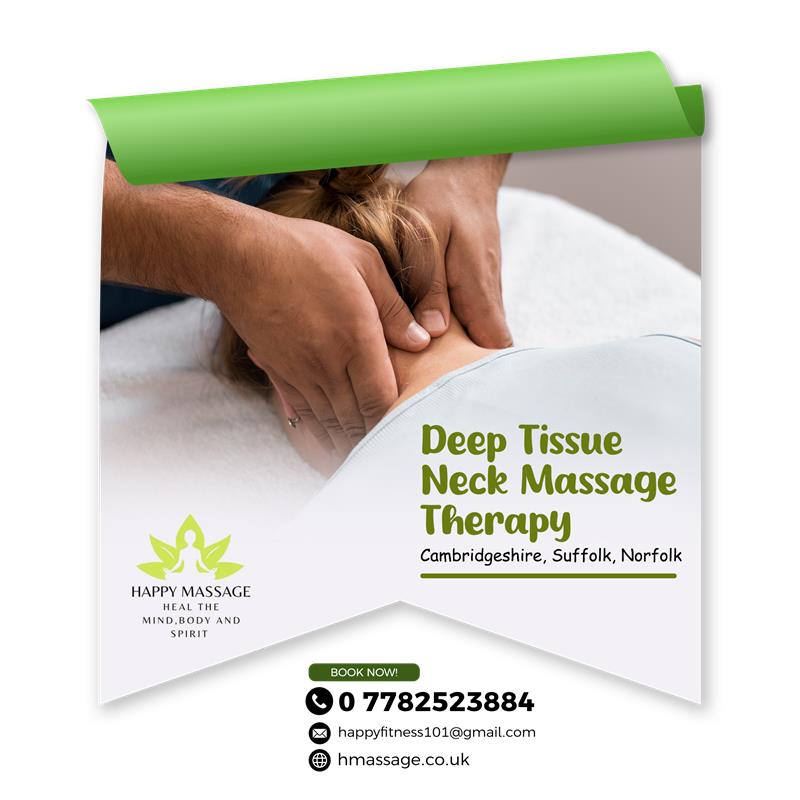
You are working harder than ever. You are sitting longer than your body was designed to. And somewhere between the deadlines, the commutes, and the sleepless nights, your muscles are quietly screaming. Here is the truth: most people are one great massage away from moving, sleeping, and living better.
Let’s be direct with you. We have seen it happen time and again; people walking in hunched, tight, and exhausted, and walking out standing two inches taller.
Not because of magic, but because of deep tissue massage therapy in Cambridgeshire and Suffolk, applied correctly, by someone who understands how the body actually works.
In this post, we are going to break down exactly what deep tissue massage therapy is. We also talk about why it works, who it is for, and how you can use it to reclaim your body from the grip of chronic pain. Let’s get into it.
⚙️What Is Deep Tissue Massage Therapy And Why Should You Care ?
Here is what most people get wrong: they think a deep tissue massage is just a regular massage done harder. That’s like saying a scalpel is just a sharper kitchen knife. The technique is fundamentally different.
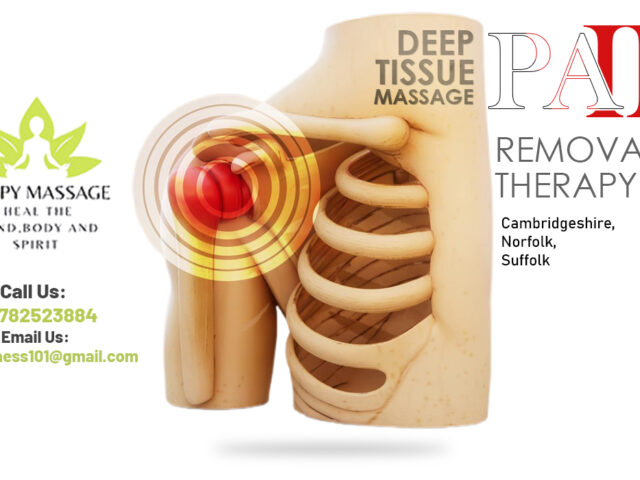
Deep tissue massage therapy works by applying slow, firm pressure to reach the deeper layers of muscle tissue and fascia. These are connective tissues that wrap around your muscles. The goal is not relaxation (though that often comes with it). The goal is to break down adhesions. These are stubborn knots and bands of rigid tissue that restrict blood flow, limit range of motion, and cause that dull, persistent ache you have been carrying around for months.
Think of it like this: imagine your muscle fibres are like strands of rope. When they are healthy, they slide smoothly past each other. When you are stressed, overworked, or injured, those strands start to stick and tangle together. Deep tissue therapy is how you untangle them.
🔧 88% of clients report reduced pain after just 1 session
🔧 3× more effective than NSAIDs for chronic back pain relief
🔧 60% reduction in cortisol levels post-session
Those numbers are not guesswork. A study published in the Annals of Internal Medicine found that massage therapy was significantly more effective than self-care books or medication for chronic low-back pain. The science is there. The question is whether you’re using it.
⚙️Deep Tissue Massage Pain Removal | How It Actually Works :
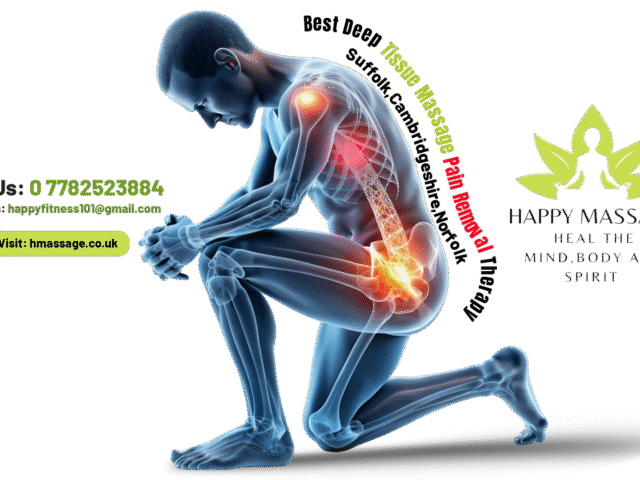
Let’s talk about deep tissue massage pain removal in Norfolk and Suffolk, because this is where most people want to start. You have pain. You want it gone. Completely understandable.
Here is the mechanism. When a therapist applies slow and deliberate strokes across the grain of your muscle fibres, a few things happen simultaneously :
🔑 Circulation surges :
Blood rushes into oxygen-deprived tissue, flushing out lactic acid and metabolic waste that is building up in those tight spots.
🔑 Nerve sensitisation drops :
Deep pressure activates your parasympathetic nervous system, which downregulates pain signals. It literally tells your nervous system to calm down.
🔑 Adhesions break down :
Sustained pressure physically separates stuck tissue, restoring normal gliding motion between muscle layers.
🔑 Inflammation decreases :
Research shows that massage reduces pro-inflammatory cytokines. It also boosts mitochondria production in muscle cells, the same effect as exercise.
🔑 Posture resets :
By releasing the chronic tension pulling your skeleton out of alignment, your body can finally settle into its natural posture.
The bottom line? Deep tissue massage pain removal is not a temporary fix. When you do it consistently, it addresses the root cause, not just the symptom. That is the difference between a painkiller and a solution.
“Pain is not the enemy. It’s information. Deep tissue therapy teaches your body to interpret that information differently — and ultimately, to stop sending the alarm altogether.”
⚙️The Deep Tissue Neck Massage | Why Your Neck Deserves Special Attention :
If we had to pick one area of the body that most people neglect most catastrophically, it would be the neck. Without question.
Think about how you spend your day. You are hunched over a laptop. You are scrolling on your phone with your chin tucked to your chest. You are driving with your head craned forward. Each of these positions places the equivalent of 27–60 lbs of force on your cervical spine, far beyond what it was designed to handle repeatedly.
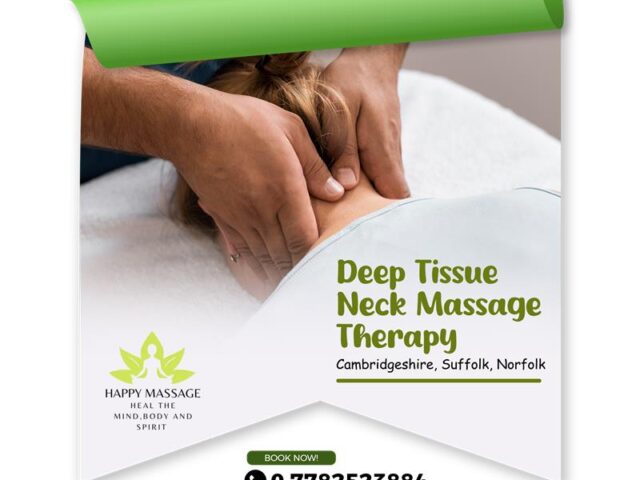
This is exactly why a deep tissue neck massage has become one of the most requested and most impactful treatments available. The neck is a dense network of muscles, tendons, nerves, and blood vessels all packed into a small space. When tension accumulates there, the consequences ripple outward: headaches, shoulder pain, jaw tension, even eye strain and ringing in the ears.
A skilled therapist performing a deep tissue neck massage will work through several key muscle groups :
🔑 Sternocleidomastoid (SCM) :
That long rope-like muscle running from your ear to your collarbone. When it is tight, it is a major trigger for tension headaches and limited rotation.
🔑 Suboccipitals :
Tiny muscles at the base of your skull. These are headache central. Most people have never had them properly released, and the difference is staggering.
🔑 Levator scapulae :
It runs from the top of your shoulder blade to your neck. Chronically overworked in desk-based lifestyles and responsible for that nagging “crick in the neck” that never quite goes away.
🔑 Trapezius :
The broad muscle across your upper back and neck that most people can feel knotting up under stress.
A proper deep tissue neck massage is not just about pressure. It is about sequencing, body position, and understanding how one muscle group affects the next. When it is done right, it can provide relief that no amount of hot showers, foam rolling, or over-the-counter medication can match.
⚙️Who Is Deep Tissue Massage Therapy For ?
Here is a question we get all the time: “Is deep tissue massage therapy right for me?” The honest answer: if you have a body that moves, sits, sleeps, or works, then yes, almost certainly.
That said, deep tissue therapy is particularly powerful for people dealing with :
🔎 Chronic lower back or upper back pain
🔎 Neck stiffness, tension headaches, or migraines
🔎 Repetitive strain injuries (RSI) from desk work or physical labour
🔎 Sports recovery and athletic performance maintenance
🔎Postural imbalances from sedentary lifestyles
🔎 Fibromyalgia or general muscle hypersensitivity
🔎 Post-surgical scar tissue or injury rehabilitation
It is worth noting that deep tissue massage therapy is not the same as a relaxation massage. It is not appropriate in every situation. If you have blood clots, active inflammation, skin conditions in the treatment area, or are in the early stages of a recent injury, communicate this to your therapist. A professional will always adapt the treatment to your specific needs.
⚙️What to Expect from Your First Session ?
Let us set accurate expectations, because we think a lot of people avoid deep tissue therapy because they have heard it “hurts.” Here is the nuanced truth: it can involve discomfort, especially when working on significantly knotted tissue, but it should never feel like damage. There is a clear difference between therapeutic discomfort and pain. A good therapist stays firmly on the right side of that line.
Most people describe the sensation during a session as an intense, satisfying pressure. Many call it a “good hurt” that feels productive. After your session, mild soreness for 24–48 hours is completely normal, similar to the feeling after a solid workout. You need to drink plenty of water, avoid intense exercise that same day, and let your body integrate the work.
By session two or three, most clients notice a dramatic shift. Range of motion improves. Sleep quality increases. That constant baseline tension they’d come to accept as normal starts to dissolve. And many ask themselves the same question: why did I wait so long?
⚙️Making Deep Tissue Therapy Work for You Long-Term :
Here is the growth hacker in talking: do not treat deep tissue massage as a one-off luxury. You need to treat it as a systematic investment in your productivity, performance, and quality of life.
The most effective approach we have seen is a structured programme: an initial series of weekly or fortnightly sessions to clear accumulated tension, followed by monthly maintenance sessions to prevent it building back up. Pair this with basic stretching, adequate hydration, and regular movement breaks throughout your workday, and you will be operating at a level most people simply don’t reach.
Your body is your most valuable asset. The ROI on keeping it functional and pain-free is higher than almost any other investment you can make. We are convinced of that.
📢 Final Action :
Book Your Session at Happy Massage.
At Happy Massage, Happy Singh, a professional, fully qualified massage therapist, specialises in deep tissue neck massage, serving clients across Suffolk, Norfolk, and Cambridgeshire.
Whether you’re dealing with chronic neck tension, persistent back pain, or post-sport muscle fatigue, Happy delivers targeted, results-driven therapy that actually moves the needle.
Book your session with Happy Massage today.